What is an On-Grid Solar System?

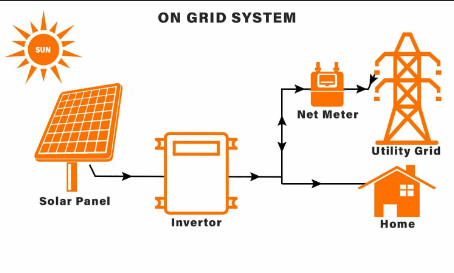
An on-grid solar system is a solar power setup that is connected directly to the utility electricity grid. It generates electricity from sunlight and supplies your home or business. Excess power produced is exported to the grid through net-metering, which reduces your electricity bill.

Key Features
  • Connected to the main electricity grid (no batteries required)
  • Lower installation cost compared to battery systems
  • Excess power exported to grid → energy credits via net-metering
  • Can reduce electricity bills up to 80–90% (depending on usage)
  • Ideal for most residential & commercial installations
On-Grid Solar System
How it works
  • Solar panels generate DC power from sunlight.
  • An inverter converts DC to AC (usable by appliances).
  • Your property uses solar power first; excess is sent to the grid.
  • At night or during low production, power is drawn from the grid.
  • Net-metering credits lower your monthly electricity bill.
Benefits
  • Lower lifetime energy cost
  • Minimal maintenance (no batteries)
  • Fast payback period in many locations
  • Reduces carbon footprint

Commercial On-Grid Solar System

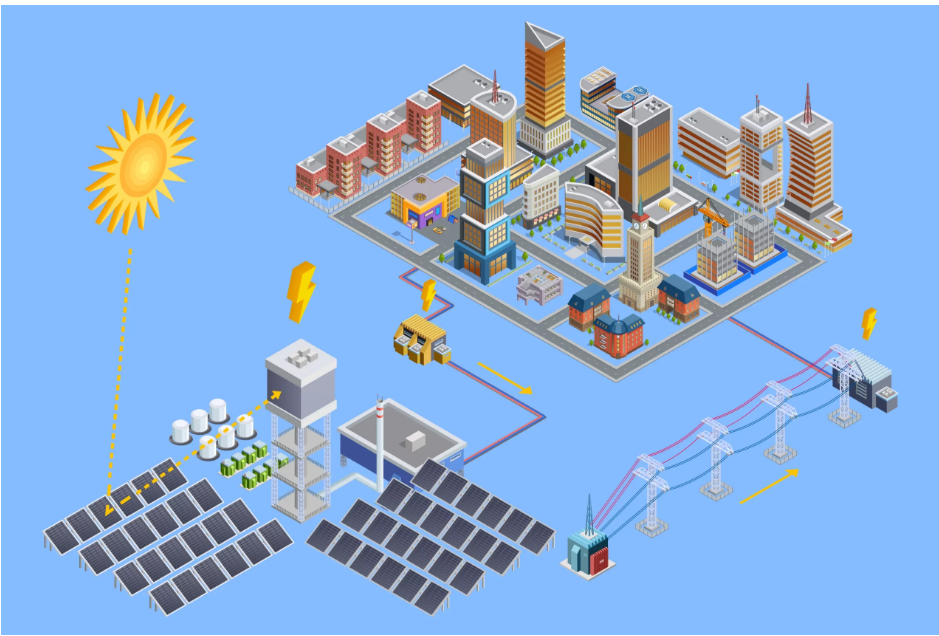
A commercial on-grid solar system is designed for offices, factories, shops, institutions, and businesses with high electricity consumption. It directly reduces operational costs by generating clean energy and exporting surplus power to the grid through net-metering.

Commercial Solar Panels

Why Commercial Solar?

Commercial buildings consume large amounts of electricity during daytime, which makes them perfect for solar power. An on-grid setup ensures maximum efficiency without requiring batteries, reducing electricity bills by up to 60–90%.

Ideal for:
  • Factories & Industrial Units
  • Offices & Corporate Buildings
  • Schools, Colleges & Hospitals
  • Shops, Malls & Commercial Spaces
  • Hotels & Restaurants
Key Benefits
  • Huge savings on monthly electricity bills
  • Very low maintenance (no batteries)
  • Long 25+ year panel life
  • Faster ROI for commercial users
System Capacity
  • 10 kW – 25 kW
  • 50 kW – 100 kW
  • 250 kW – 500 kW
  • 1 MW+ (custom projects)
How It Works
  1. Solar panels generate power during the day.
  2. Inverter converts DC to usable AC power.
  3. Your building uses solar energy first.
  4. Extra energy is exported to the grid.
  5. Net-metering reduces the monthly bill.